
The Saint-Ouen Flea Market: an open-air setting for the big screen
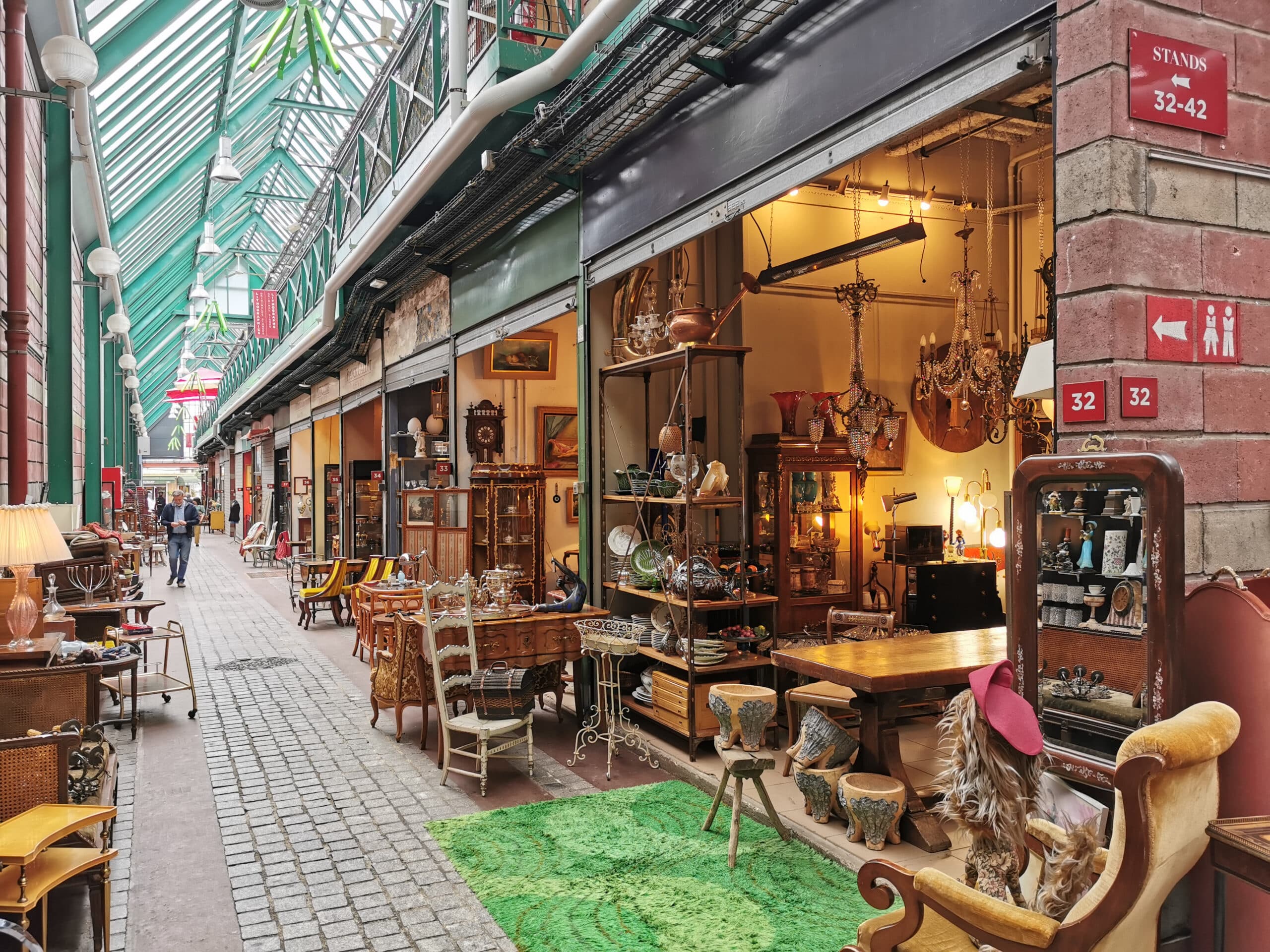
On the outskirts of Paris, just past the Porte de Clignancourt, the Saint-Ouen Flea Market stretches out like a city within a city. A maze of covered alleys, warehouses overflowing with objects, and shops full of curiosities. For over a century, this labyrinth of treasures has fascinated bargain hunters, strollers… and filmmakers. Here, reality already seems to be on display: faces, materials, and sounds form a ready-made setting, where fiction only has to slip in.

From the “Zone” to the Flea Market: the origins of a setting
At the end of the 19th century, beyond the fortifications of Paris, lay the “Zone”: a shady area populated by ragpickers and scrap collectors. These inhabitants lived off the capital’s waste, sorting, repairing, and selling. From this marginal economy, the flea market was born, initially informal, before becoming organized into actual covered markets. Georges Lacombe gave one of the very first filmed portraits of this world in 1928 in La Zone, a social chronicle of the lives of ragpickers. Shot on location, his film documents this landscape of shacks, vacant lots, and anonymous faces, which already foreshadows the bustling world of today’s flea markets.
This memory of recycling and handiwork still permeates the market. Among the aisles of Vernaison, Paul-Bert, Serpette, and Malik, visitors today discover a mosaic of styles and eras, but the spirit of the recyclers remains: nothing is lost, everything can be reborn.

Les Puces on screen: a popular and cinematic Paris
Cinema quickly embraced this unique setting. In 1960, Louis Malle filmed a sequence from Zazie dans le métro there. The young heroine travels through a bustling Paris, where Les Puces appears as a microcosm of the popular capital: noisy, colorful, and bursting with life. The merchants, shop signs, and passersby became extras in a film that captured the energy of real life.
Twenty years later, another outsider’s gaze fell upon these alleys: that of British director John Schlesinger for Marathon Man (1976). Shot partly in Paris, the film combines a spy plot and a manhunt in authentic settings. Roy Scheider wanders through the Saint-Ouen flea market, between the antique stalls of the Biron market and dusty facades. This scene reveals the visual power of the place: a space that is both picturesque and disturbing, conducive to suspense and reverie. The flea market thus becomes an international setting, a symbol of a labyrinthine Paris where one can get lost as much as one can hide.
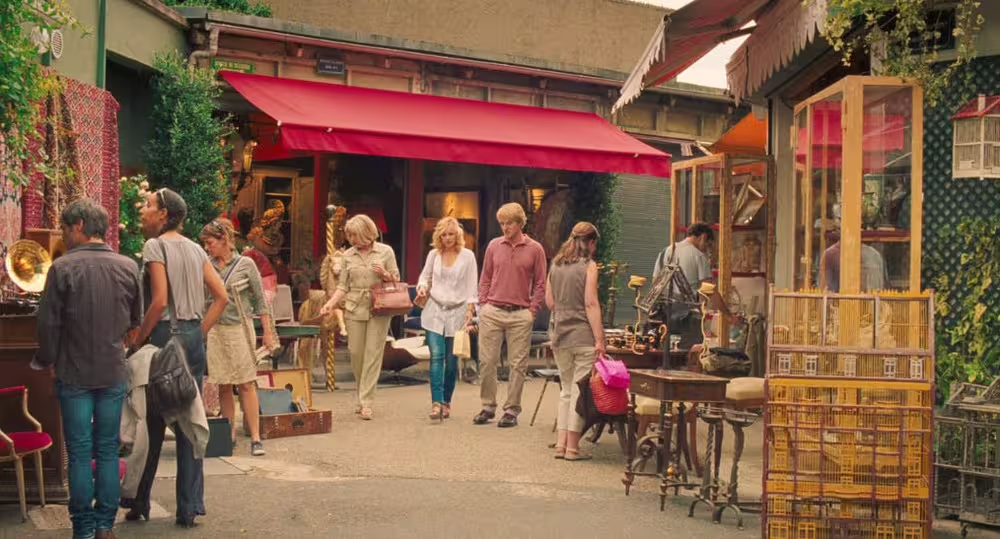
In 2011, Woody Allen went there for a completely different atmosphere with Midnight in Paris. In the Paul-Bert market, his main character, Gil, strolls among the art objects and meets an antique dealer played by Léa Seydoux. The scene, bathed in golden light, symbolizes Americans’ fascination with a dreamlike Paris, a city of antique objects and romantic coincidences. This postcard-perfect, often fantasized-about Paris finds a concrete anchor here: the flea market embodies the blend of nostalgia and timeless elegance that the director loves so much.
Finally, in Michel Gondry’s L’Écume des jours (2013), the flea market appears as a natural extension of the surrealist universe of Boris Vian and the director. We find the taste for diversion, poetic bricolage, and the idea that objects have a life of their own. The market becomes a workshop of imagination, a laboratory of images where reality and fantasy merge.
A lively workshop for film professionals
The Flea Market has always been a source of inspiration for those working in the film industry. Set designers, costume designers, and prop masters come here to find what studios cannot reproduce: the patina of time. The Chez Sarah boutique is filled with thousands of period clothes, from Belle Époque corsets to 1970s suits. Costume designers for film and theater are regular visitors: some of the costumes for the film A Very Long Engagement and the series Downtown Abbey were acquired here. A few aisles away, the Librairie de l’Avenue offers visual scouts old magazines and books, sources of inspiration for recreating period sets.
It is these discreet but essential places that make the flea market an invisible link in French cinema. Before being a filming destination, the market is first and foremost a huge reservoir of objects and know-how, a place where set designers come to find inspiration.

A setting full of memories
The Saint-Ouen flea market isn’t just a place to hunt for bargains: it’s a living memory, a sensitive archive of the city. Every rusty sign, every scratched mirror, every worn armchair seems to tell a story. The market doesn’t need any constructed sets: it’s already cinema. Between the beauty of the objects and the energy of the place, filmmakers find a microcosm of the world, a theater of urban life.
And when visitors venture there, they are never far from a movie set: they are walking in a setting that has inspired dreamers and filmmakers alike for a century.
To continue the discovery, check out the film walk “Les Puces au cinéma”, a stroll through the Vernaison, Malik, and Paul-Bert markets, featuring anecdotes from film shoots and the history of Parisian cinema.