
Parisian train stations in cinema: a cinematic journey
Parisian train stations, veritable crossroads of lives and stories, have always fascinated filmmakers. Their majestic architecture, bustling atmosphere, and symbolism make them the setting of choice for the silver screen.
Since 1896 and the Lumière brothers’ film The Arrival of a Train at La Ciotat Station, trains have been a constant presence in cinema. Today, the SNCF hosts more than a hundred film shoots per year in France, and a dedicated team assists directors and producers in filming in railway settings.
Let’s take a look at seven Parisian stations that showcase the diversity of films shot in Paris.
Gare du Nord: a crossing point at the heart of the screen
The Gare du Nord, Europe’s busiest train station, has been the setting for numerous films. The star of Parisian train stations, it is perhaps also the most international from a cinematographic point of view. Here are three different projects among dozens!
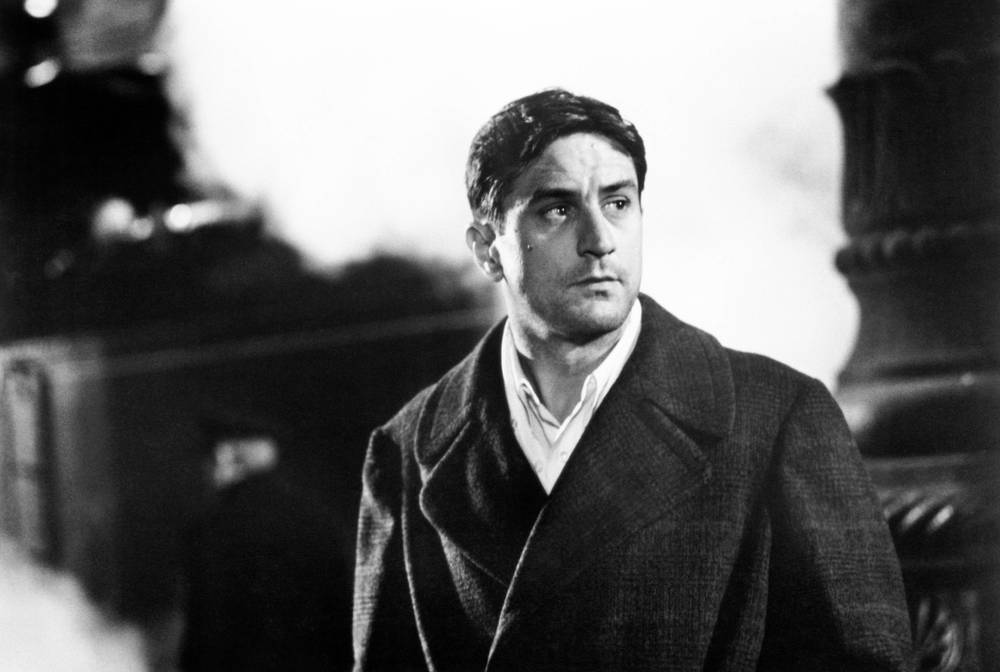
In 1984, Sergio Leone shot several scenes from Once Upon a Time in America there, with the station replacing New York’s Grand Central Station, which disappeared in the 1930s. Why? Because it was built on the Parisian model.
In Amélie (2001), Jean-Pierre Jeunet merges the Gare du Nord and the Gare de l’Est in the editing, deliberately blurring the landmarks: Amélie gets off the train at the former, while Nino exits via the stairs of the latter.
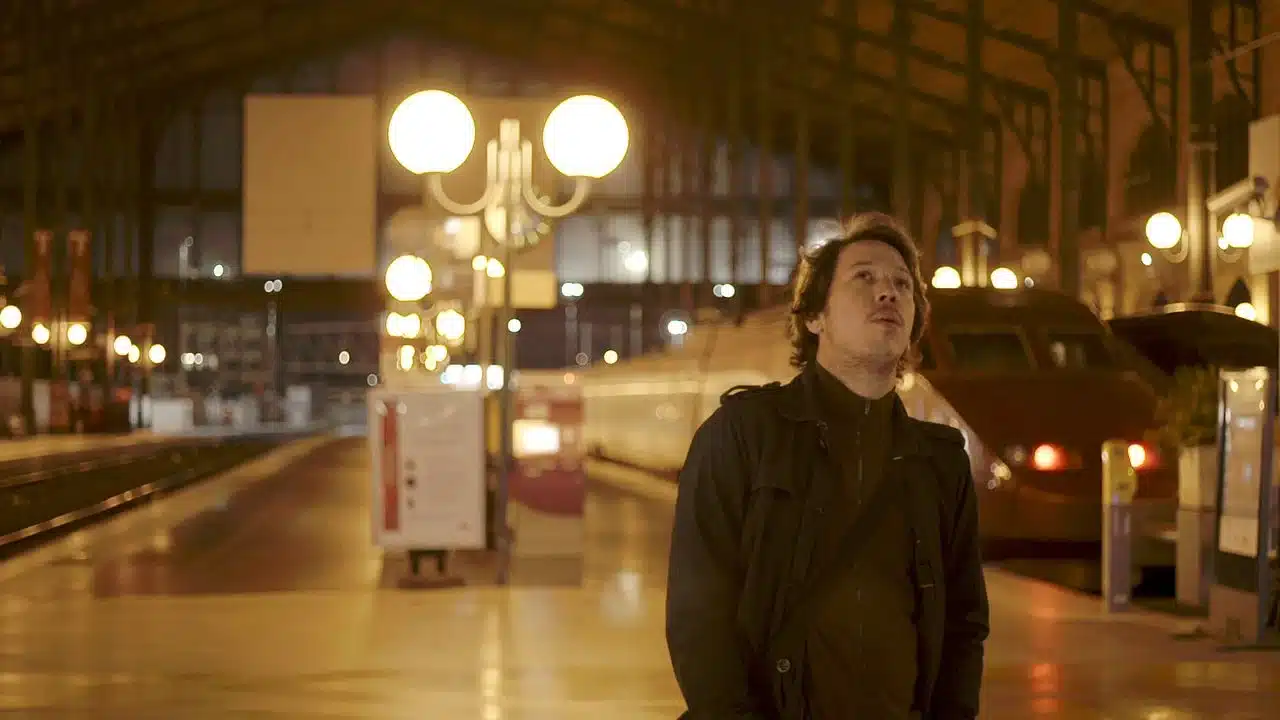
In 2013, Claire Simon devoted an entire film to this bustling place: Gare du Nord. Between the platforms, shops, and corridors, an encounter unfolds between Ismaël (Reda Kateb), a sociology student, and Mathilde (Nicole Garcia), a history teacher—a vibrant portrait of the ever-changing global city.

Saint-Lazare Station: a historic journey through cinema
Built in 1837, Saint-Lazare Station was the first station in Paris and the Île-de-France region, and immediately captivated the cinema world, which was fascinated by this symbol of modernity.
In 1896, Méliès shot a film, now considered lost, called Saint-Lazare Station. Perhaps he wanted to continue the work begun by Claude Monet in 1877, who, in his series of paintings on this station, was already seeking to recreate movement.
In 1938, the film The Human beast, adapted from the novel of the same name by Émile Zola and directed by Jean Renoir, was partly set in this station and its surroundings.
In 1966, Claude Lelouch filmed the famous final scene of A Man and a Woman there: Anouk Aimée and Jean-Louis Trintignant meet on the platform, captured on the fly, without permission, among the passengers. “We filmed secretly, among the passengers, to capture the truth of the moment,” Lelouch recounted.
In 1979, Michel Blanc arrived there by mistake in a ski suit in Patrice Leconte’s French Fried Vacation 2.
Finally, in 2025, in Cédric Klapisch’s Colours of Time, Adèle, who comes from Normandy, finds herself in Paris during the Belle Époque, in the midst of the industrial revolution. While she arrives via the Seine, her descendants retrace her journey in reverse, passing through the Gare Saint-Lazare.

Gare de l’Est: a luxury stand-in
Thanks to its classic architecture and easy access, Gare de l’Est has often stood in for other stations on screen.
In Gérard Oury’s The Great Stroll (1966), it plays the role of Gare de Lyon, where filming was not permitted.
In 1960, in Louis Malle’s Zazie in the Metro, the young heroine arrives at Gare de l’Est to spend some time in Paris with her uncle. We are not between two stations here, but rather between two eras, since the electric train on which Zazie arrives is pulled by a steam locomotive! The contrast creates a pleasant temporal collision 🙂
In Patrice Chéreau’s Those Who Love Me Can Take the Train (1998), around fifteen characters gather to attend the funeral of one of their friends in Limoges. Several scenes are shot at the Gare de l’Est and Gare Saint-Lazare stations, even though trains to Limoges depart from the Gare d’Austerlitz station.

Montparnasse Station: between modernity and cinematic memory
Newer and more streamlined than its neighbors, Montparnasse Station embodies the modernity of Parisian railways. Its glass and concrete architecture attracts filmmakers in search of a contemporary setting, while also bearing, in the collective imagination, the spectacular traces of the 1895 accident, when a locomotive crashed through the facade of the former station and onto Place de Rennes—an iconic image of movement that long inspired cinema.
In Jacques Rozier’s Maine Ocean (1986), Dejanira (Rosa-Maria Gomes) runs from the station hall to the platform of the “Maine-Océan” express train, which is about to depart. Destination: Ile d’Yeu. On the train, her encounter with a young lawyer and two SNCF ticket inspectors is the starting point for a charming, slightly zany adventure.
In 2011, Martin Scorsese recreated a fantasy version of the place in Hugo, evoking the early days of cinema and the mechanical dream of the train. His main hero repairs clocks, meets Georges Méliès, and narrowly escapes the famous accident mentioned above!
As for Justine Triet, she filmed a few scenes there in Victoria (2016), capturing the daily movement of anonymous travelers in this iconic setting of contemporary Paris.

Gare de Lyon: the most cinematic?
Gare de Lyon, with its large glass roof and legendary restaurant Le Train Bleu, is one of the most photogenic stations in the city.
In Costa-Gavras’ The Sleeping Car Murder (1965), the hall becomes the setting for a thrilling crime drama, the first feature film by a filmmaker who already had a keen sense of rhythm and tension when he set up his camera there.
Forty years later, Danièle Thompson had Cécile de France arrive there in Orchestra Seats (2006), a young provincial girl who came to Paris to find her place among artists and dreamers.
The station takes on a more intimate tone in Christophe Honoré’s Winter Boy (2022), where the train symbolizes the transition to adulthood.
As for the restaurant Le Train Bleu, with its frescoes and gilding, it appears in numerous films, from Nikita (1990) to Colours of Time (2025), Place Vendôme (1998), Mr Bean’ Holiday (2007) and Micmacs (2009), offering us a unique setting that bears witness to a timeless Paris.

Austerlitz Station: filming history
Often associated with memories and stories of the past, Austerlitz Station appears in several historical epics.
Jean-Pierre Jeunet set his film A Very Long Engagement (2004) there, in which Mathilde, played by Audrey Tautou, sets out to find her fiancé who disappeared during the war.
Occupied Paris also features in The Day and the Hour (1963), filmed by René Clément, director of The Battle of the Rails and Is Paris Burning?, while Alain Delon takes a train there in Joseph Losey’s masterpiece Mr. Klein (1976).
More recently, Katell Quillévéré chose the same station for Along came Love (2023), a post-war drama between a single mother (Anaïs Demoustier) and a student (Vincent Lascoste). Part of the station was reconstructed with a steam locomotive and vintage carriages.

Gare d’Orsay: from train station to museum
Let’s not forget the Gare d’Orsay, because before it became the famous museum we know today, it was the setting for the film The Trial (1962), in which Orson Welles used this then-abandoned space as a metaphor for a Kafkaesque and oppressive world. A few years later, from locomotives to masterpieces, the space simply changed passengers.
See some of the films mentioned above and many more at the Gare du Nord and Gare de l’Est train stations during the Gares et Canal film walk.