
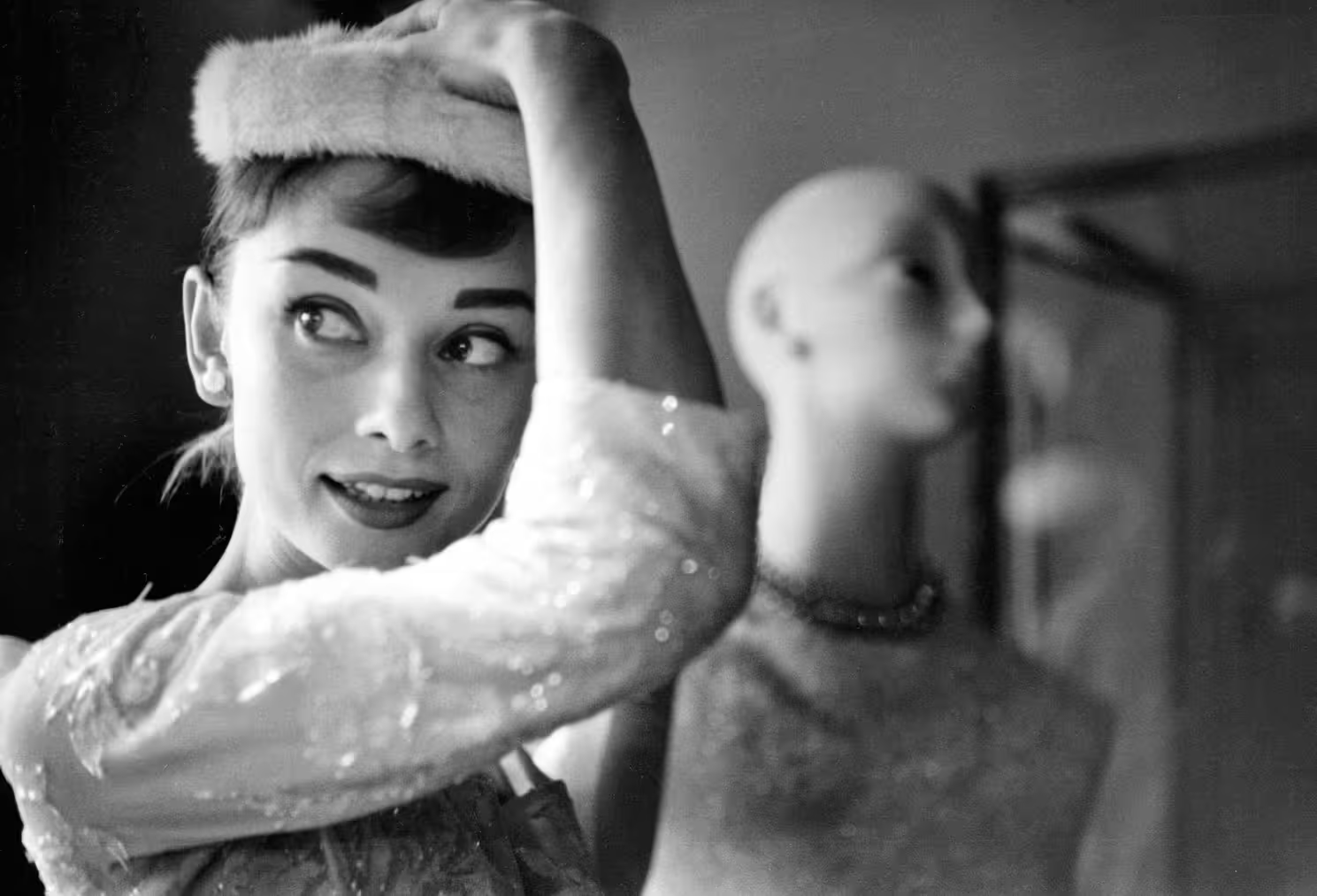
Audrey Hepburn in Paris: following in the footsteps of her iconic films
Audrey Hepburn embodied, better than anyone else, the elegance and lightness of a certain Paris idealised by cinema. In her films shot between the 1950s and 1960s, the capital becomes a character in its own right: a backdrop for romance, adventure and sophisticated comedies. Let’s rediscover the iconic locations where the actress filmed and where her image continues to haunt the cobblestones.
Sabrina (1954) – Paris in the studio and in dreams
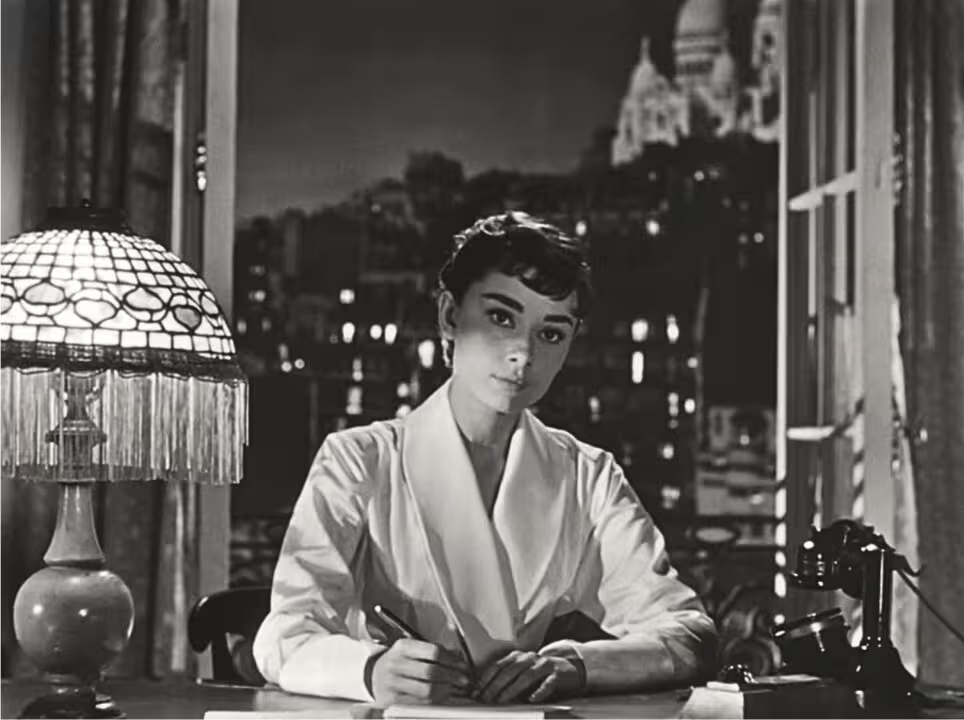
Audrey Hepburn’s first encounter with Paris on screen, Billy Wilder’s Sabrina blends myth and reality. The film, shot mainly in Hollywood, recreates a fantasy version of Paris: the Eiffel Tower can be glimpsed through the studio windows, while Sabrina, the daughter of a chauffeur, leaves to train in French cuisine and transforms herself into a distinguished young woman.
For the occasion, the novice actress convinced Billy Wilder to complement the costumes created by Edith Head with outfits by a young designer whose style she loved: Hubert de Givenchy was not much older than her and, at the age of 26, had just launched his own fashion house. Their meeting in Paris shortly before filming marked the beginning of a long friendship and collaboration that left a lasting mark on the history of fashion and cinema. Together, they defined the aesthetic of a new elegance – simple, fluid and timeless.
The next project allowed the actress to parade her charm through the streets of a capital city that, once again, was the setting for all kinds of transformations.
Funny Face (1957) – Paris on stage
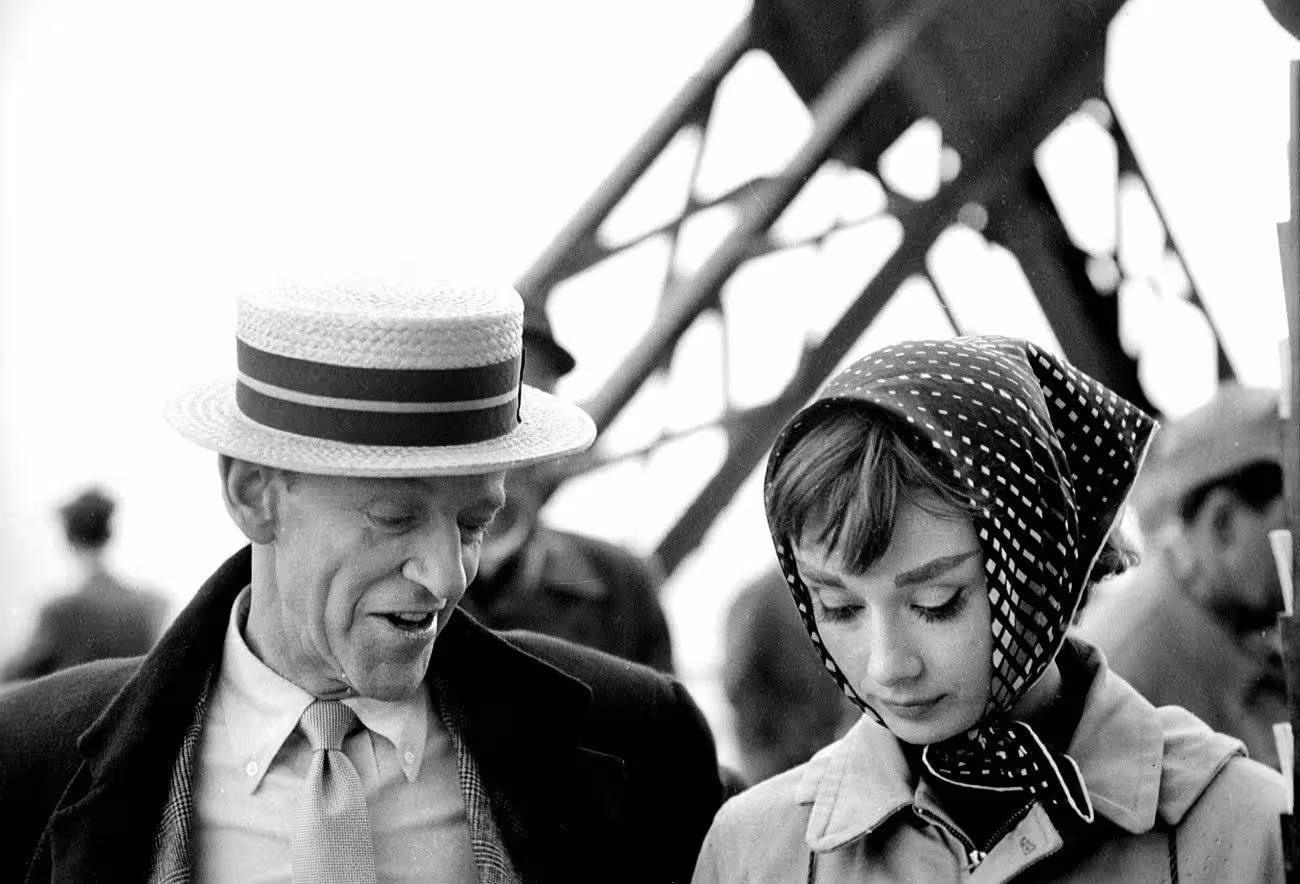
Directed by choreographer Stanley Donen, Funny Face transforms Paris into an open-air musical. Hepburn, a New York bookseller turned model, discovers the capital in the company of Fred Astaire. The camera lingers on the most iconic locations: the Champs-Elysées, Place Vendôme, Montmartre and, above all, the Eiffel Tower, the setting for an anthological musical sequence in which the characters sing Bonjour Paris! with euphoria.
The film was also shot at the Opéra Garnier, a Second Empire masterpiece designed by Charles Garnier in 1861. The actress spent several weeks there before filming. Indeed, feeling very anxious about performing pas de deux with one of the greatest dancers in cinema history, the woman who dreamed of being an Étoile as a teenager insisted on taking lessons with Lucien Legrand, dance teacher at the Paris Opera.
On screen, its monumental staircases become an improvised catwalk for her Givenchy-clad silhouette, as do the stairs of the Louvre, where she mimics the Winged Victory of Samothrace.
Love in the Afternoon (1957) – Romanticism, palace style
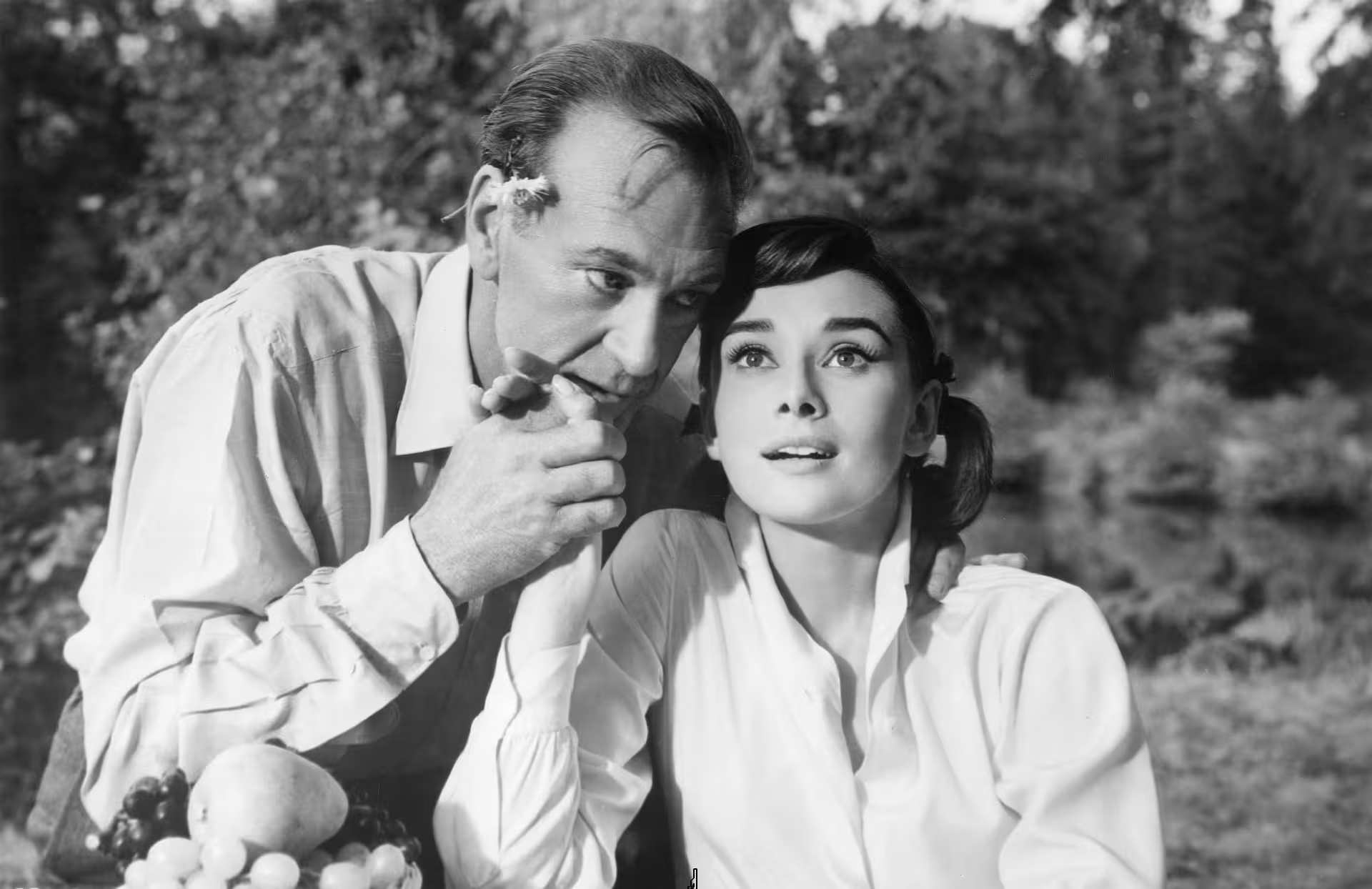
Filmed a few weeks later, Love in the Afternoon marks the second collaboration between Audrey Hepburn and Billy Wilder. The story opens in Place Vendôme, where Maurice Chevalier, a private detective, observes the comings and goings of the Ritz from the central column. It is in this palace that the actress, who plays his daughter, meets Gary Cooper, with whom she falls in love.
This was her second collaboration with Billy Wilder, who only considered the project once he had secured the actress’s participation. Indeed, the title Love in the Afternoon highlights the subversive nature of the script, a tribute to Ernst Lubitsch, and for Wilder, only Hepburn could bring the romance, freshness and mischief necessary to win us over.
The luxurious setting of the 1898 hotel becomes a symbol of romantic and sophisticated Paris. This image of the palace will remain associated with Hepburn and will be used in several films. The hotel’s façade had already appeared in Funny Face, and the hotel reappears in William Wyler’s How to Steal a Million.
Charade (1963) – Between suspense and elegance
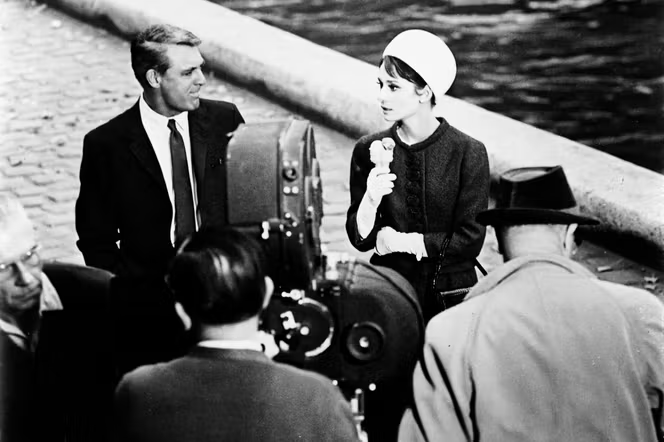
With Charade, Stanley Donen reunites with his favourite actress in a detective comedy with inimitable charm. Cary Grant and Audrey Hepburn stroll through the alleys of the Champs-Élysées gardens, the Palais-Royal gardens and the banks of the Seine.
The actress plays a young widow whose late husband allegedly stole $250,000 during the war with the help of gangsters, who are now looking for her to get their hands on the loot. Only a charming compatriot with a dubious identity (Cary Grant) agrees to help her. Hepburn chose Cary Grant for the film, and it was the only time they ever worked together. Approached by Wilder for Sabrina (replaced by Bogart) and Love in the Afternoon (replaced by Gary Cooper), he agreed to work with Stanley Donen on condition that he would not play old lovers.
The stamp market at Carré Marigny serves as the backdrop for the resolution of the plot and offers a nod to working-class Paris and its collectors. As for the metro line 1, it provides a veritable playground in a city where suspense and pretence reign supreme.
Paris When It Sizzles (1964) – The Paris of screenwriters and fireworks
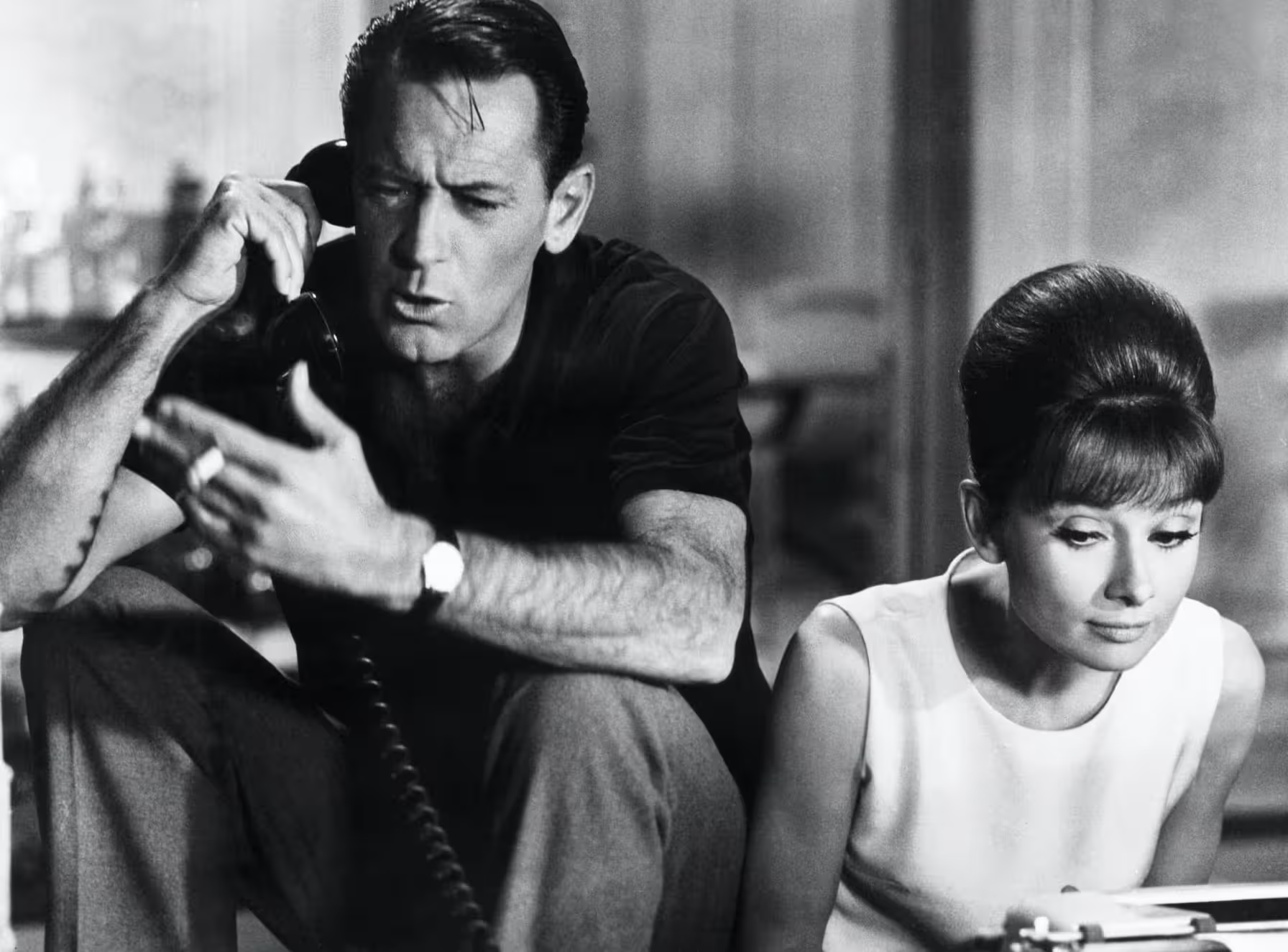
The following year, Hepburn reunited with William Holden in Paris When It Sizzles, a meta-cinematic comedy in which a screenwriter and his typist imagine several stories set in the streets of the capital.
The film also benefited from the chemistry between the two actors, who were reunited ten years after filming Sabrina, during which they had had a relationship that Holden, a heavy drinker, did not seem to have recovered from: « I remember the day I arrived at Orly airport for Paris When It Sizzles. I could hear my footsteps echoing off the walls of the transit corridor, like a condemned man walking the last kilometre. I realised that I had to face Audrey and that I had to sort out my drinking. And I didn’t think I could handle either of those situations. »
The shoot was difficult and the reception mediocre. However, the film remains an amused tribute to cinema and the city that inspires it. The camera explores the Place Dauphine, the Bois de Boulogne and, above all, the Trocadéro with a final scene, illuminated by the fireworks of 14 July, which provides the Eiffel Tower and our heroes with their most beautiful backdrop.
Humour, romance and, once again, the much-loved picture-postcard Paris.
How to Steal a Million (1966) – Place Vendôme and Maxim’s
In William Wyler’s How to Steal a Million, Hepburn returns to the tone of refined comedy and the majestic settings of Paris. She plays the daughter of a forger and shares the spotlight with Peter O’Toole. The film opens once again at Place Vendôme, before moving on to the salons of the Ritz and the famous Maxim’s restaurant, founded in 1893 and decorated in Art Nouveau style by the Nancy School. An iconic establishment of elegant Paris, the venue hosted another dinner scene with Audrey Hepburn for the film Bloodline (1979), in which she shared the screen with Romy Schneider and Omar Sharif.
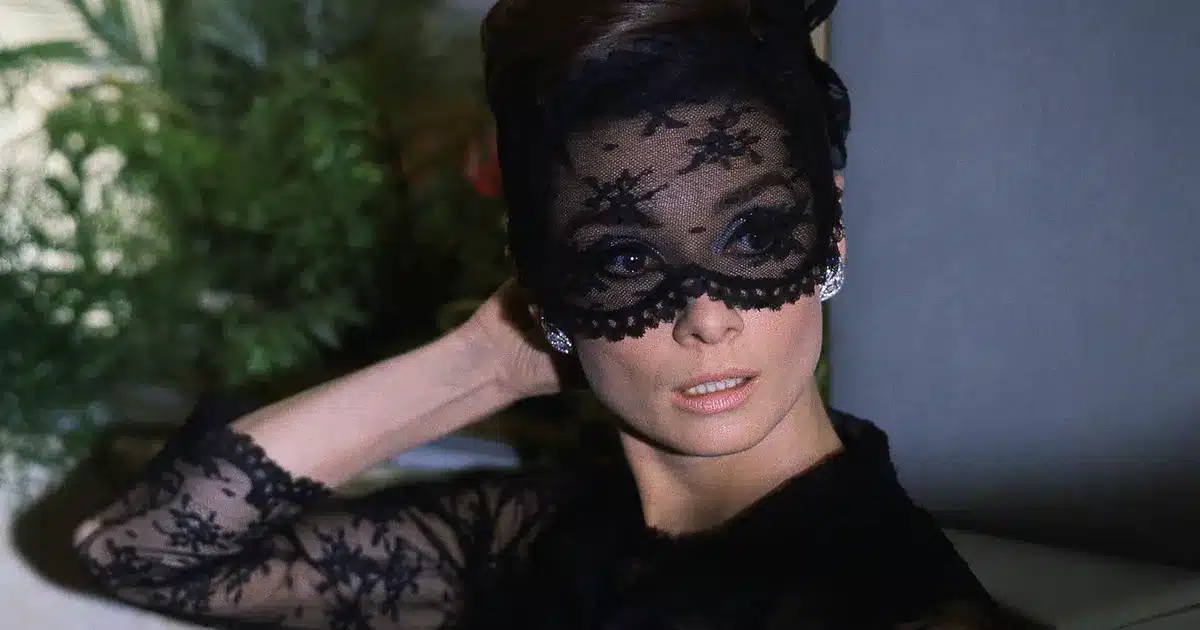
It was also in How to Steal a Million that Audrey wore one of her most famous dresses, a Givenchy masterpiece in black lace that has gone down in cinema costume history.
In fact, at the time, the reputation of the collaboration between the couturier and his muse was such that for a scene in which Hepburn tries on old, ill-fitting clothes in order to pass herself off as a cleaning lady, William Wyler has O’Toole say: ‘Well, at least it will give Givenchy a night off!’
An eternal icon
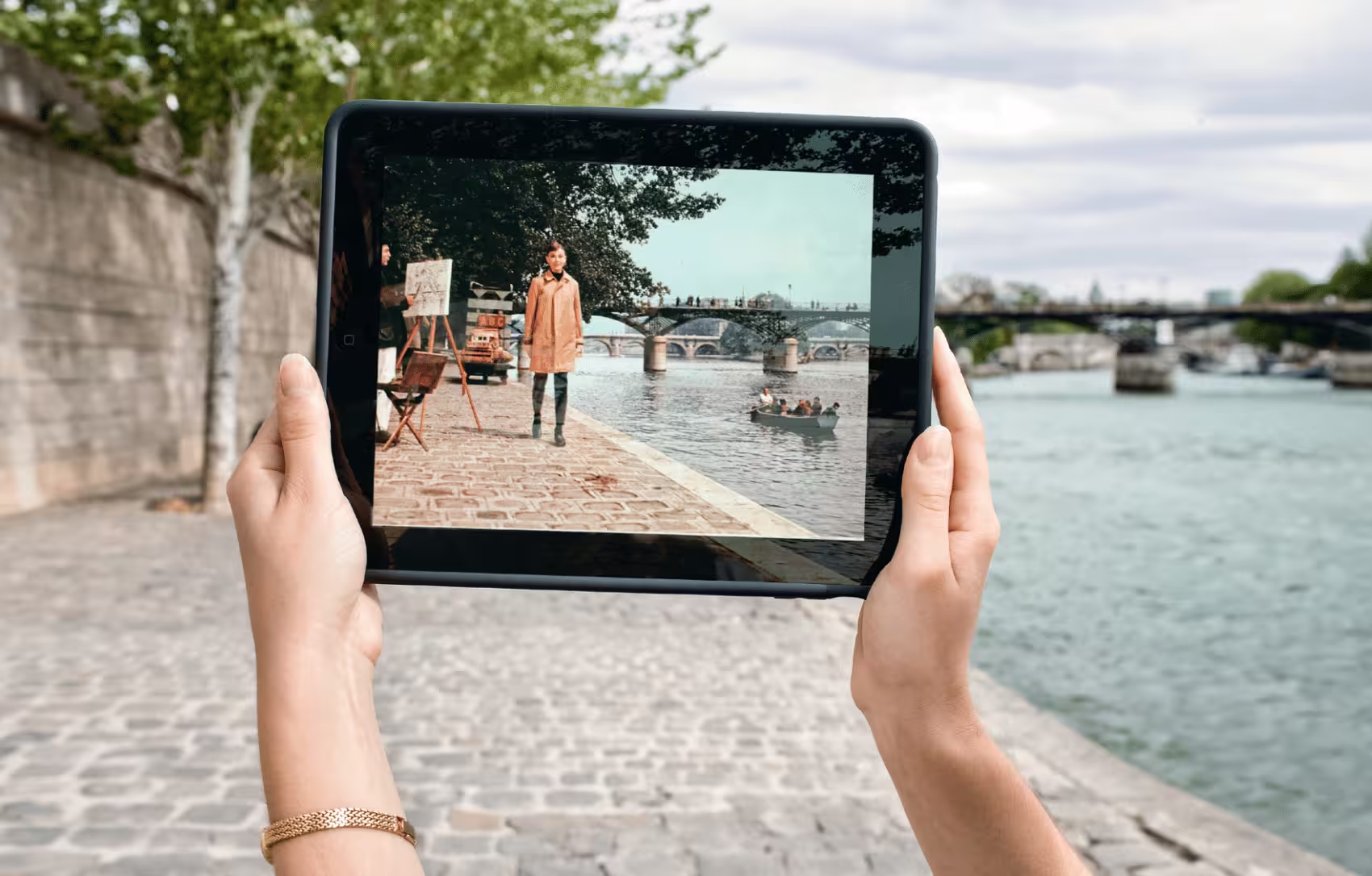
From the Alma Bridge to Place Vendôme, from the Champs-Élysées gardens to the Trocadéro, Audrey Hepburn graced the most iconic locations of Parisian heritage with her presence. Her films, often shot on location, reflect Hollywood’s love for the French capital at the time, a symbol of art, freedom and style.
In just over a decade, the actress, through her lively performances, graceful movements, love of art and magical partnership with Givenchy, offered us a poetic and universal vision: that of a cultural and romantic Paris, luminous and timeless.
To find out more, discover the locations where her Parisian films were shot on a walking tour of ‘Audrey Hepburn’s Paris’ and read our article on the history of the perfume L’Interdit, which Givenchy created especially for her.